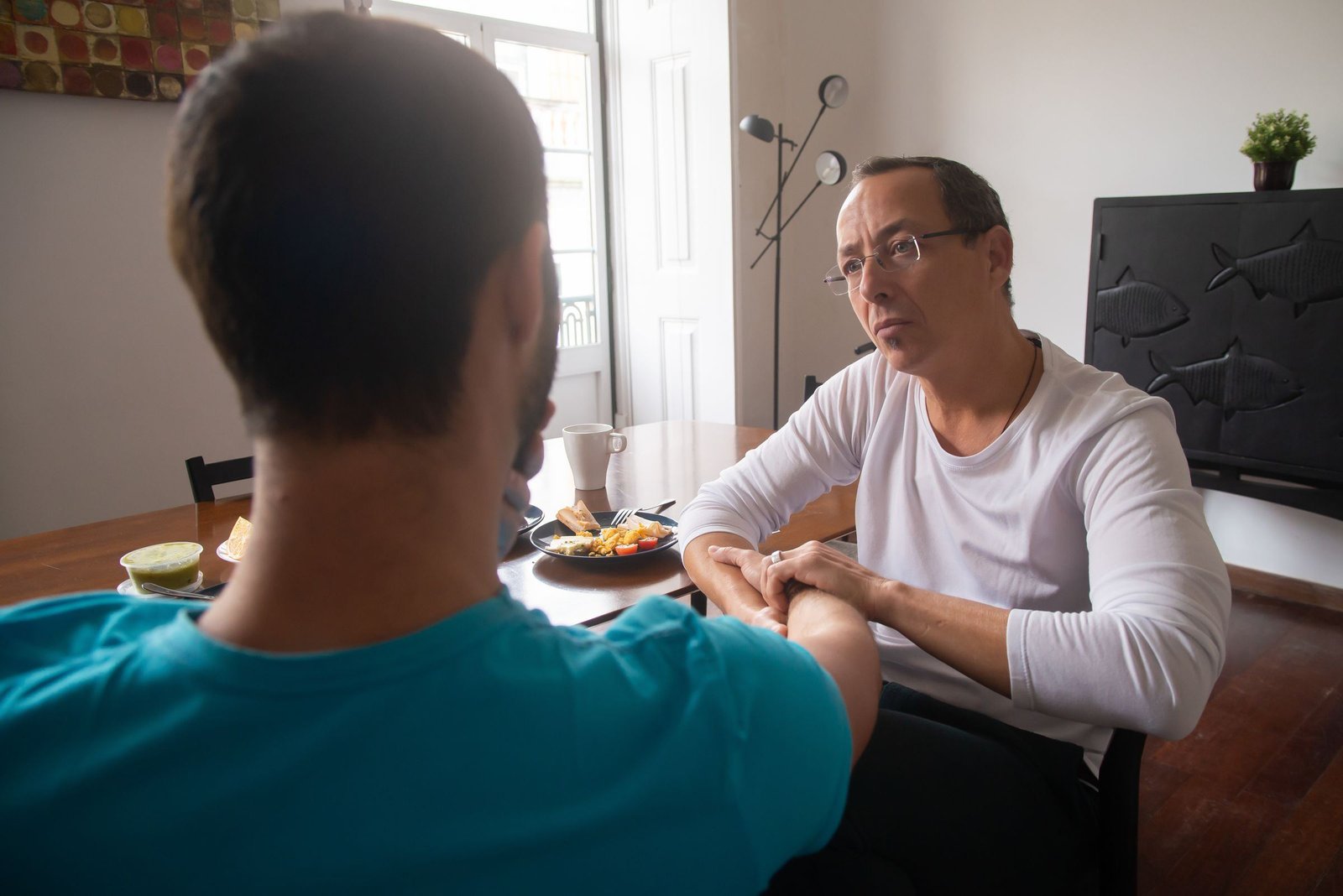
Knowing how to talk to a loved one about opioids starts with choosing a calm, private moment. Share the exact changes you noticed. Do not label or accuse them. Explain why you are worried, then listen. Offer to find support side by side. However, no script guarantees they will agree or prevents conflict.
Follow the steps below to get ready, start talking, listen, and suggest one easy next step. Check our guide on supporting a loved one for wider advice. We publish a U.S. treatment directory. We are not a treatment provider and do not claim medical review.
Begin With Worry, Not a Name
Knowing that opioid-related harm is common can help. You are not alone in your worry. In 2022, more than 81,000 U.S. drug overdose deaths involved opioids.[1] These numbers are context, not a verdict. Population statistics do not show what is happening with the specific person you love.
In this talk, aim to show concern and give support instead of proving a diagnosis. A clinician is the only one who can diagnose a substance use disorder. If you have noticed changes, our guide to the early warning signs can help you sort out what you are seeing before you speak up.
Treatment helps when a person is ready to look into it. The FDA approved three medicines for opioid use disorder: buprenorphine, methadone, and naltrexone.[2] Evidence shows all three are safe and effective options.[3] You do not need to solve treatment right now. Just open the door.
81,000+
U.S. overdose deaths involved opioids in 2022[1]
3
FDA-approved medications treat opioid use disorder[2]
Set Up a Quiet, Private Chat
One conversation does not need to resolve every issue. Your goal is to start a discussion, not force a quick commitment. Find a quiet moment when you both feel calm and expect no interruptions.

Try listing two or three specific changes you have seen rather than saying you have a problem. You might bring up missed plans or changes in sleep, for instance. While these observations are not proof of a diagnosis, they show your concern comes from what you see. If you want to learn more about what to watch for, our guide on early warning signs of opioid use can help you spot patterns.
Preparation Checklist
Your ticks are saved on this device only.
Am I Ready to Start This Conversation?
This is a conversation-planning tool only. It is not a diagnosis or safety assessment. Do not rely on this score if there is immediate danger or you suspect an overdose—call 911.
Plan Your Talk in Four Parts
No magic script exists that ensures a person accepts help. But a clear, kind structure can make it easier to start the conversation without turning it into an argument. View these four parts as a loose guide rather than a strict script. Adjust the words so they sound natural to you.
- Ask permission. First, check if now is a good time. You could say, “Can we talk about something I worry about?” This lets them pause and listen instead of getting defensive right away.
- Share one specific observation and concern. Stick to what you saw or heard, and pair it with care. For example, "I noticed you seemed unwell after using, and I care about you." Avoid labels like "addict" or broad accusations like "You always mess up." Specifics are harder to argue with than judgments.
- Listen and reflect. Allow them to talk. Do not interrupt, correct, or diagnose them. If they share something, reflect it back simply: "It sounds like you're feeling really stressed right now." You don't have to agree with everything they say to show you are listening.
- Offer a choice. End by giving them some control over what happens next. You might ask, "Would you like me to help look at support options, or would you rather talk again another time?" This respects their autonomy while keeping the door open for future conversations.
Remember that your goal is connection, not coercion. If they aren't ready to talk, it's okay to step back and try again later when things are calmer.
When Things Get Heated
Feeling weighed down during these chats is normal. It is fine to pause if tempers flare or one of you withdraws. You can say something simple, like, "I love you, and I don't want us to fight. Let’s pause and discuss this tomorrow.”

Walking away is not the same as quitting. This guards your bond, letting you try later once you are both calm. The Community Reinforcement and Family Training (CRAFT) method aims to boost good actions instead of demanding a clash.[4] At times, refusing to make things worse is the best help you can give.
You may need clearer limits if you feel trapped in loops of guilt and arguing. See our guide on setting healthy boundaries to learn how to guard your well-being and stay connected.
Give Them One Small Option
When talking about opioids, offer one clear choice without pressure. Let your loved one weigh it, rather than making it a demand for your love or support. Treatment does not require moving into a facility right away. The American Society of Addiction Medicine guides that care should match the person's own needs and goals.[5]
Here are a few ways to make an offer that leaves the choice with them.
| Possible Offer | How to Say It |
|---|---|
| Listen first without fixing | “If you want to chat about what is happening, I am here. I am not judging.” |
| Help find an assessment | "Would it help if I looked into getting you an evaluation with a doctor?" |
| Look at options together | "We could sit down and look at what kinds of help are out there, just to see." |
| Go along to an appointment | “If you choose to go, I can take you and wait, or join you inside.” |
If they seem willing to explore help, tell them that medications for opioid use disorder can ease cravings and withdrawal symptoms.[1] You do not have to fix it all at once. Suggest one step and let them choose. Our guide on helping them start treatment has more tips for finding care.
When They Are Not Ready
It takes courage to discuss opioids, and it is tough if your loved one is not ready to listen. If they decline, respect that answer for now. Close the talk calmly. You do not need to force a choice in that moment. Leaving the door open matters more than winning the argument. For broader strategies on talking to a loved one about drugs, see our guide on calm steps and safety. If children are involved, our guide on talking to kids about parent addiction offers ways to reassure them and keep them safe.

Afterward
Pause to breathe and sort out your own emotions. Talk to a friend you trust or join a support group for you.
Later
If they seem willing, suggest one specific next step, like checking a local resource together. There is no fixed schedule for this. Steer clear of repeated messages or visits that feel like pressure.
Helping a person with opioid use disorder is hard, and you need care as well. NAMI Family Support Groups host free, peer-led meetings for friends and family facing these issues.[6] They give you a safe spot to share stories and learn from those who get it.[6]
Setting boundaries guards your well-being while you wait for a good time to try again. You can love someone yet still limit actions that hurt you or your household. Build your own support system so you do not burn out before they are ready to change.
When There May Be an Overdose or Immediate Danger
Do not have your planned talk if you suspect an overdose. Right now, your sole task is getting help. Signs of an opioid overdose can include not responding and slow or shallow breathing.[7] To prepare your household before a crisis hits, see our guide on preventing opioid overdose at home with practical safety steps.
- Call 911 right away. The FDA advises calling 911 or getting emergency medical help immediately in any case of a known or possible opioid overdose.[7]
- Give naloxone if you have it. Naloxone can reverse an opioid overdose.[7] Follow the directions on the product package. Because naloxone works for a short time, more than one dose may be needed.[7]
- Follow the dispatcher's instructions. Do not leave the person alone while you wait for help.
Read our guide on recognizing overdose signs to spot warning signs before an emergency happens. For a full step-by-step, see our guide to overdose emergency steps.
What Signs Can and Cannot Reveal
You might notice shifts in how your loved one looks or behaves. Use these observations to start a kind talk, not to make a diagnosis. Many conditions can cause similar changes,[8] and some signs are hard to spot from the outside.[9]

Slow or shallow breathing, being unresponsive, or being hard to wake can be signs of an opioid overdose. Call 911 immediately.[7]
| What You Might Notice | What It Can’t Prove | A Nonjudgmental Way to Ask |
|---|---|---|
| Small pupils[8] | Opioid use disorder specifically; similar signs may come from other causes, like sedative use or liver or kidney issues[8] | “I’ve noticed something seems different lately. Are you feeling okay?” |
| Changes in daily responsibilities, like missing work or dropping hobbies | That opioids caused it | “I’ve missed seeing you at our usual dinners. How have things been going?” |
| Seeming fine one moment but struggling the next | That there is no issue; loss of control or craving may not be visible if someone still takes prescribed pain medicine[9] | “I care about you. I’m here if you ever want to talk about how you’re doing.” |
See these signs as gentle prompts instead of diagnoses. You can offer support and urge your loved one to get professional help instead of playing detective.
Be Careful with the “3-3-3 Rule”
You might have seen an online rule claiming to spot opioid use disorder. Don’t use it to diagnose someone; treat concerns as a reason for a caring conversation and encourage them to seek professional support. Check the FAQ below for more information.
Support for You Matters, Too
You do not need to handle this by yourself. Finding support for yourself can ease the talk and help you feel calmer.
The SAMHSA National Helpline is a good place to start. Dial 1-800-662-HELP (4357) for free, confidential treatment-referral help any hour, all year.[10] Also try FindTreatment.gov, SAMHSA's U.S. treatment locator, to find local programs.[11]
If you or your loved one are in emotional distress or facing a mental health or suicide crisis, the 988 Lifeline offers call, text, and chat support.[12] If there is immediate physical danger or you suspect an overdose, call 911 or go to the nearest emergency room right away.
Frequently Asked Questions
How do I bring up my family member’s opioid use without causing a fight?
Pick a quiet, private moment when you both have a few minutes. Ask if they are open to talking, then share one specific thing you noticed and why it worries you. Hear what they say without cutting in. Suggest one small next step, such as exploring options together, and give them time to think.
What should I say if they deny there is a problem?
Try not to argue or prove them wrong. You can say something like, "I hear you, and I’m still worried because I care about you." Leave the door open by asking if they’d be willing to talk again later or consider one support option. Staying calm makes it easier for them to listen next time.
Should I talk to them when they seem intoxicated?
If they have severe confusion, are hard to wake or unresponsive, have slow or shallow breathing, or may be overdosing, call 911 immediately. Do not wait until they are sober.[7]
Can behavior alone tell me whether someone has opioid use disorder?
One sign cannot confirm a diagnosis. Opioid use disorder is diagnosed by a pattern of use causing issues or distress over 12 months.[1] Use your observations to suggest a professional check, not as proof. A qualified clinician can evaluate the situation.
How long does opioid withdrawal typically last?
Ask a healthcare professional what timeline to expect. This depends on the opioid and the person's situation. Seek medical guidance instead of handling withdrawal alone.
Is the “3-3-3 rule” a reliable way to assess opioid addiction?
No. There is no widely accepted '3-3-3 rule' for diagnosing opioid addiction. Do not trust catchy rules or online quizzes over professional advice. If you worry about someone's opioid use, watch specific actions. Get help from a healthcare provider or helpline.
Can I call the SAMHSA National Helpline if my loved one will not call?
Yes. The SAMHSA National Helpline offers free, confidential treatment referral and information services 24 hours a day.[13] You can call yourself to ask about options in your area and get guidance on how to approach the situation. For an immediate overdose emergency, always call 911 instead.