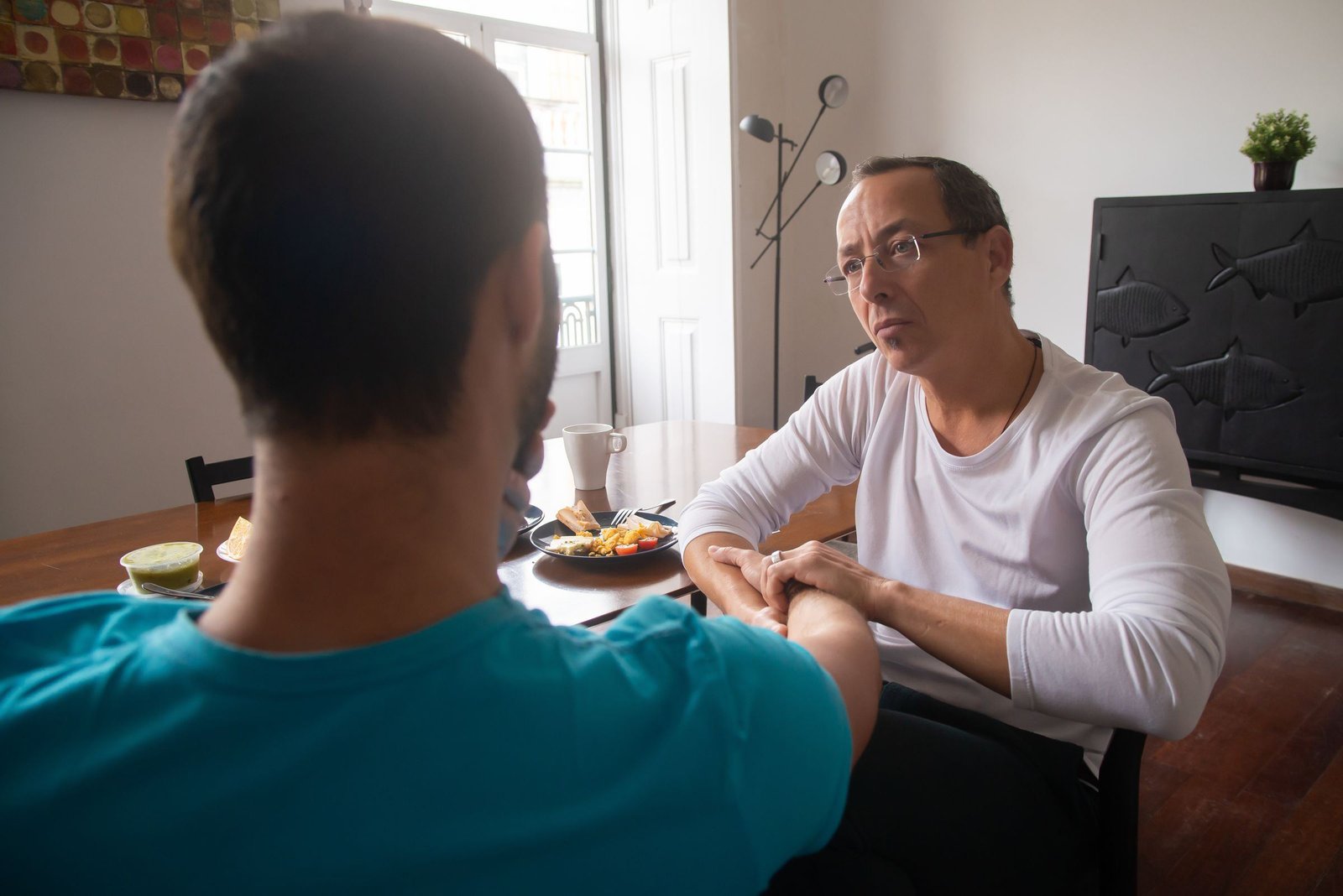
With a family member who has opioid use disorder, you decide which actions you will take and which you will not. State your limits calmly and keep them. You can give practical help, such as looking into treatment options. However, you do not have to hide their opioid use. Their recovery is not your duty. For practical steps on getting your loved one into care, our guide on how to get loved one into opioid rehab explains the process. Once you have decided to seek care, our guide on choosing rehab for loved one covers how to find the right fit.
This method safeguards your health. It also allows them a chance to seek help.
Our site is a U.S. treatment directory, and we do not provide treatment. Read our guide on helping someone with opioid addiction to learn about finding care.
The Impact of Opioid Use Disorder on Families
Opioid use disorder affects more than just one person. The entire home often feels the pressure when a relative struggles with opioids. You might see shifts in daily routines, finances, relationships, trust, and stress levels. Experiences like these differ a great deal. Every family handles this situation differently. When children are involved, our guide on talking to kids about parent addiction offers ways to provide reassurance and safety. For a broader view of how addiction is a family disease, our guide explores the roles and boundaries that support everyone.
Feeling overwhelmed, angry, or exhausted is normal. You might worry all the time about your loved one's safety. Needing a break might make you feel guilty. Having these feelings does not show you love them less. They mean you are human in a difficult situation.
Seeking support for yourself is not abandonment. Caring for your own well-being helps you remain steady and present over the long term. You cannot give from an empty cup, so guarding your health is a responsible choice rather than a selfish one.
Enabling Vs. Support: The Role of a Boundary
Support involves giving help that honors your loved one’s choices. It also keeps your own limits safe. Your actions enable them when they block the results of their behavior. This might look like covering up missed work, paying off debts, or making excuses to others.

A single act of kindness does not make you an enabler. The worry is a repeated pattern. This habit hurts you and hides reality from your loved one. Boundaries are not about control or punishment. They are about choosing your own actions to stay safe.
Setting limits does not ensure your loved one stops using. It cannot force them into treatment. Their own choices drive recovery. Yet, clear boundaries can lower chaos at home. They may also prompt your loved one to seek help independently.
| Situation | Supportive response | Response that may enable |
|---|---|---|
| They ask for money for rent or food | Offer to buy groceries directly, or help them find local aid services | Give them cash, which they might use on substances |
| They miss work or school due to using | Encourage them to speak with their employer or school counselor themselves | Phone their teacher or boss to cover for them |
| They face legal trouble or debt from using | Listen and offer emotional support while they handle the fallout | Cover fines or post bail for them again and again |
A boundary outlines your actions, not demands on others. You cannot control their behavior, but you can choose your response.
Define Limits Clearly and Enforce Them
Boundaries are most effective when they are clear, calm, and linked to something you can do. You do not need lengthy explanations or threats. Instead, set a firm limit and stick to it consistently.
- Name the specific situation. Target a single behavior, not their entire history. For instance, “lending cash” is more precise than “being irresponsible.”
- Pick steps you control alone, like locking the car or keeping your wallet closed.Decide what you control.
- State the boundary briefly and calmly. Explain your own actions, not demands on them. Be brief and compassionate.
- Follow through and review. Always act as promised. Later, review if this rule still supports your well-being.
Below are four common scenarios. Use the suggested wording and take actions that depend only on you.
| Situation | Possible wording | Follow-through action |
|---|---|---|
| They ask for cash | "I care about you, but I'm not giving money anymore." | Close your wallet or exit the room if requested. |
| They want to borrow your car | “I am not lending the car at the moment.” | Put keys away in a drawer or keep the garage locked. |
| Household chores are skipped repeatedly | “From today on, I will manage my own house duties.” | Stop covering their tasks; let natural consequences happen safely. |
| Behavior feels unsafe (aggression, intoxication near kids) | “I cannot remain present during this situation.” | Bring children and dependents with you to a safe place; don't leave them with an impaired or aggressive caregiver. Call 911 if anyone is in immediate danger. |
Notice what these phrases avoid: blame ("you always"), labels ("you're an addict"), and threats you aren't ready to carry out ("if you don't stop, I'll leave forever"). Instead, they name one behavior, its effect on you, and your next step. This keeps the focus on your safety and peace rather than trying to control their choices. For more on navigating these difficult conversations, our guide on how to talk to loved one about opioids offers practical scripts.
It is normal if speaking these words aloud seems impossible right now. Rehearsing with a neutral third party can help you gain confidence before trying at home. Family therapy approaches for alcohol use disorder include communication skills training. They can help repair and improve family relationships.[1] Learn more about family therapy options to find support suited to your situation.
Setting Limits in a Shared Home
Daily challenges arise when you live with someone who has opioid use disorder. Boundaries help protect your peace of mind, safety, and space. These limits focus on your needs and actions, not on controlling their substance use.

Center your attention on your own actions. For example, you might say, "If I feel unsafe, I will leave the house," rather than demanding they stay calm. Doing this lowers conflict and keeps the focus on your safety.
Immediate danger always comes first. If you are afraid for your life or someone else's, call 911 or go to the nearest emergency room right away. Do not wait to discuss a household rule or boundary in that moment.
Clear agreements make daily life easier for everyone. Consider money, chores, visitors, car use, and shared areas. Decide what you need to feel safe at home.
Guard your personal belongings as well. Keep prescription medicines locked away, out of sight and reach, and never leave them on counters or sinks.[2] If theft is a worry, secure other valuables. Know a trusted friend or relative to call when things get hard, and have a place to go if you must leave fast.
Household Boundaries and Safety
Your ticks are saved on this device only.
Care for Your Health and Support Circle
Looking after a person with opioid use disorder is hard. You deserve support too, even if your loved one is not ready for treatment. On your own timeline, you can begin counseling, join a peer group, or seek practical help.
Peer groups link you with people who get it. Al-Anon says its peer-support groups help families and friends touched by another's drinking.[3] For opioids or other drugs, Nar-Anon Family Groups aims its support at relatives and friends impacted by another's drug addiction.[4] SMART Recovery Family & Friends holds meetings for those worried about a loved one's addictive behavior.[3] Sample a few and choose what fits best.
Read our guide to managing caregiver burnout for more on protecting your energy. See more about Al-Anon support groups here.
What Support Would Help Me Right Now?
This self-check is for information only and isn't a diagnosis. If you are in immediate danger, or if a loved one is unresponsive or breathing abnormally, call 911 now regardless of your score.
Support Treatment Without Tying It to Conditions
Is change possible for your loved one? Yes, recovery from opioid use disorder is possible. Yet the journey and timing look different for each person. You cannot ensure someone else's recovery by setting a boundary. Your role is to provide support, not to control the outcome.

You can give real help with treatment but still hold your personal limits. For example, you might say, "I am willing to help you find a program. I am not willing to give you cash." This separates the offer of help from the boundary about money or housing. If money issues feel complicated, our guide to financial boundaries with a loved one helps you spot warning signs.
Real Steps to Offer Support
If you feel safe, think about offering specific, optional help:
- Research options together: Search for nearby clinics or telehealth providers.
- Stay with them as they contact a provider or insurer.Make calls:
- Arrange transport: Take them to a first check-up if that works for you.
- Learn about medications: There are three FDA-approved medications for opioid use disorder: methadone, buprenorphine, and naltrexone.[5] Knowing about these options can make the discussion feel less frightening.
One treatment plan does not fit all. Clinicians use tools like the ASAM Criteria to pair people with services based on their unique needs and situation.[6] So there may be various program types to look at. These span from outpatient counseling to residential care.
If your loved one tries treatment and uses opioids again, it does not mean they failed. It also does not mean your boundaries were useless. Relapse is common in chronic conditions like substance use disorder. In this case, focus on safety and getting back into care, not on punishment. Learn more about what to do after a relapse.
Recognize an Opioid Overdose and Respond
Use this part for emergencies, not boundary setting.If you suspect an overdose, act now. Never wait to see if they wake up. Our checklist on what to do if loved one overdoses walks you through the immediate steps to take. For the days after an overdose, our guide on supporting loved one during opioid withdrawal offers practical family advice.
Signs of an opioid overdose can include inability to wake the person, slow or shallow breathing, and very small pupils.[7] Other signs may include limp body, pale or blue skin, and choking or gurgling sounds.[7]
- Shout or rub their knuckles firmly on their breastbone to try to wake them.Check responsiveness and breathing. Look for breathing that is slow, shallow, or missing.
- Call 911 immediately. Tell the dispatcher you suspect an opioid overdose. Make this call now. Do not stop to look for naloxone first.
- Give naloxone if available. Carefully follow the instructions for the product. In 2023, the FDA approved the first naloxone nasal spray that did not need a prescription.[8]
- Provide rescue breathing or CPR if needed. If the person is not breathing or is breathing abnormally, begin rescue breathing or CPR as instructed by the 911 dispatcher. Do not let this delay calling 911 or administering naloxone.
- Stay with the person. Do what the dispatcher tells you until emergency responders get there. Naloxone's effects are temporary, so emergency medical help is needed in all cases of known or suspected opioid overdose, even if naloxone is given.[9]
Read our guide on recognizing overdose signs for more on what to watch for. After immediate safety is handled, you can look into find treatment programs that help with long-term recovery.
Frequently Asked Questions
What should I do if my loved one pushes back against a boundary?
Briefly and calmly repeat the limit. You do not need to argue. Just do the action you chose. If pushback continues, talk to a counselor or family-focused professional.
Can I get support if my loved one will not attend therapy?
Yes. You can ask a counselor for support for your own needs. Your loved one does not need to agree to treatment first.
How can I help if my loved one is not ready for treatment?
Suggest a gentle, small next step, such as searching for programs together. Maintain your personal boundaries. Family-based approaches may help begin a talk, yet they cannot make someone get care. The Community Reinforcement and Family Training (CRAFT) method has been shown to be more effective than confronting the person in an “intervention” to help a person with an alcohol problem accept treatment.[1]
What should I avoid saying to someone with opioid use disorder?
Skip insults and threats that you cannot actually carry out. Do not reduce the person to their condition. Guidance from the National Institute on Alcohol Abuse and Alcoholism recommends using medically accurate, person-first language to avoid stigmatizing behaviors and language.[10] Communication guidance suggests beginning statements with “I” rather than “You,” because “You” statements tend to come out as more aggressive or blaming.[11] Describe specific behavior, and say what you will do next.
Can I call the SAMHSA National Helpline for a loved one?
Yes. Family members can call for treatment-referral information and guidance on services. The SAMHSA National Helpline provides free, confidential treatment-referral information and is available 24 hours a day, seven days a week.[12] For an emergency or suspected overdose, call 911 instead.